RAIUC is an independently operated initiative run on a not-for-profit basis created to help organisations use artificial intelligence in a responsible, transparent and safe way. It provides a framework for organisations that want to demonstrate accountable steps when introducing, managing and using AI.
RAIUC was developed in response to the growth of artificial intelligence across organisations and society. AI tools are increasingly accessible, but many organisations are still deciding how to use them appropriately. The challenge is not only technical. Organisations also need to consider responsibility for decisions, protection of information, impacts on people and how AI use is explained.
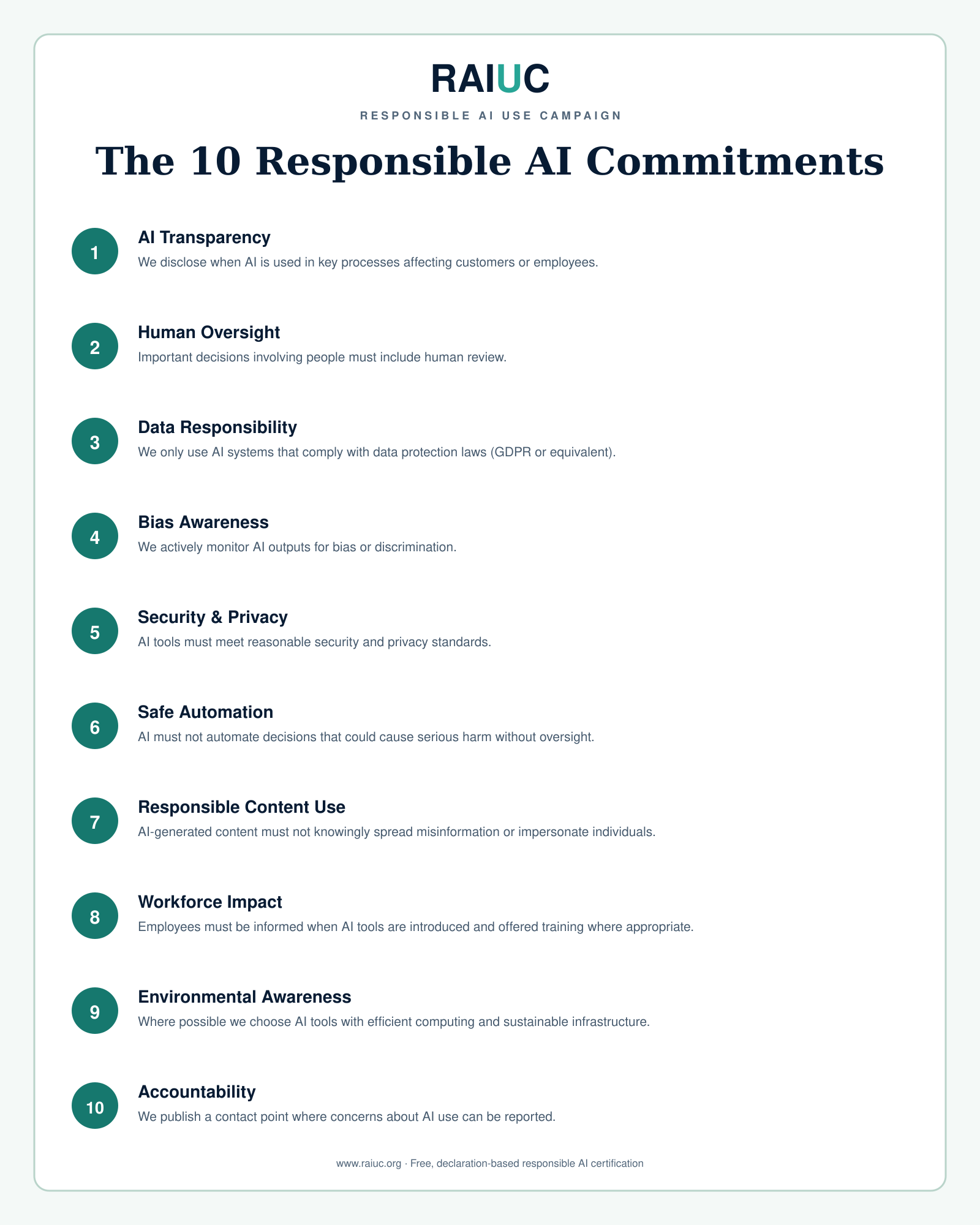
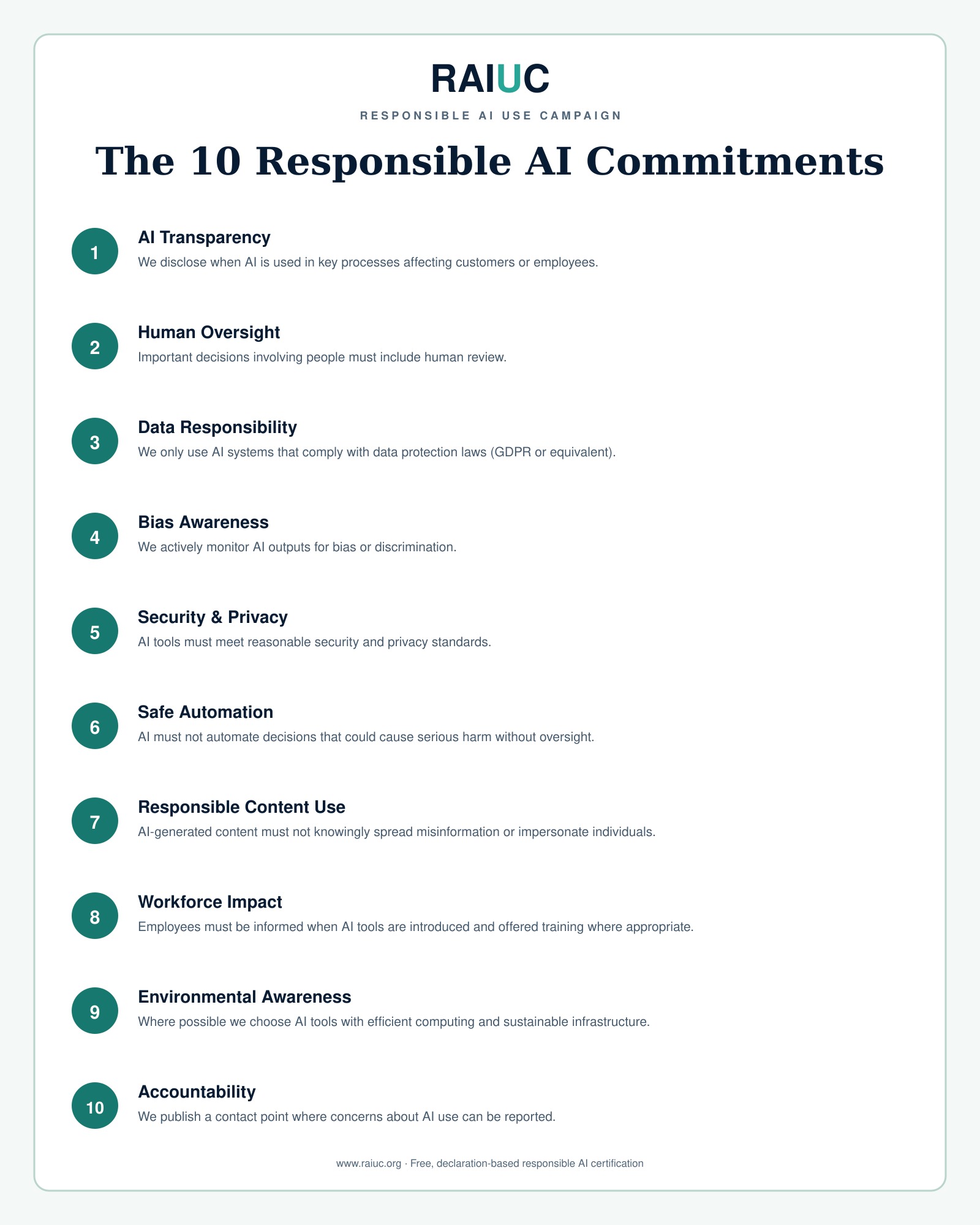
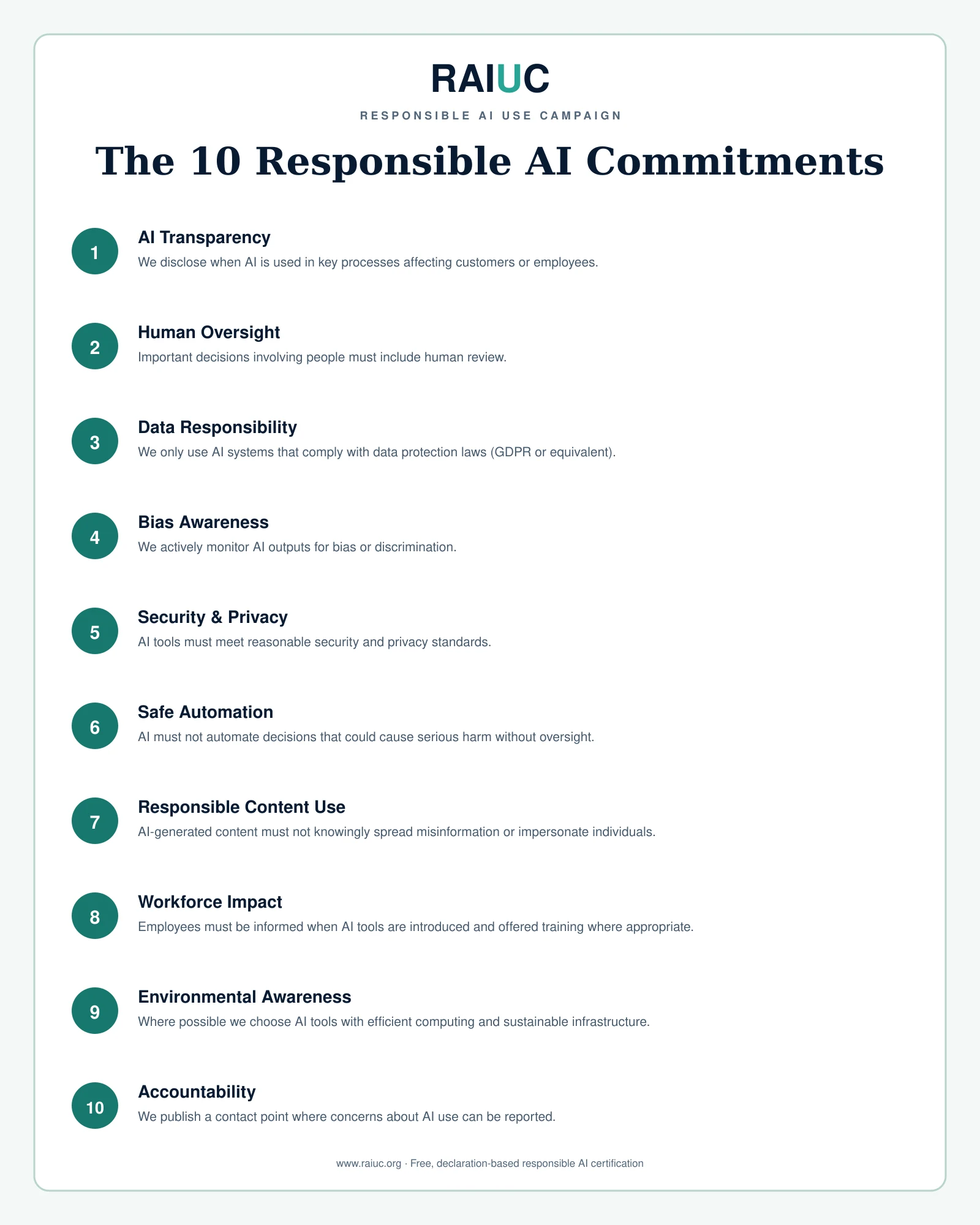
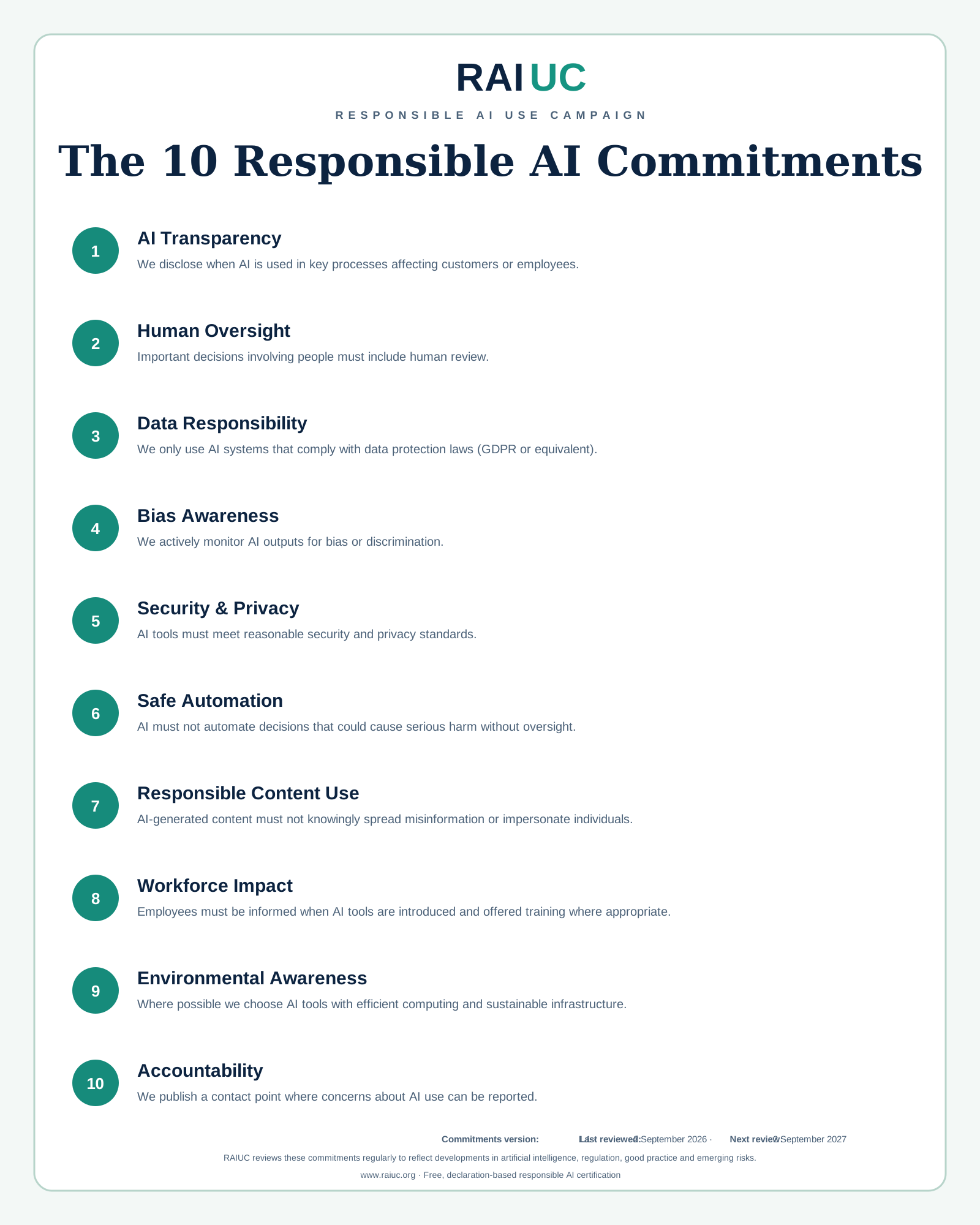
At the centre of RAIUC are 10 commitments addressing important areas of responsible AI use. These include human oversight, transparency, privacy, security, fairness, accountability, accuracy and responsible decision-making. Together, they provide a straightforward foundation for reviewing organisational use of AI. They encourage organisations to consider not only whether an AI system can perform a task, but whether it should be used, what safeguards are appropriate and who remains accountable for the outcome.
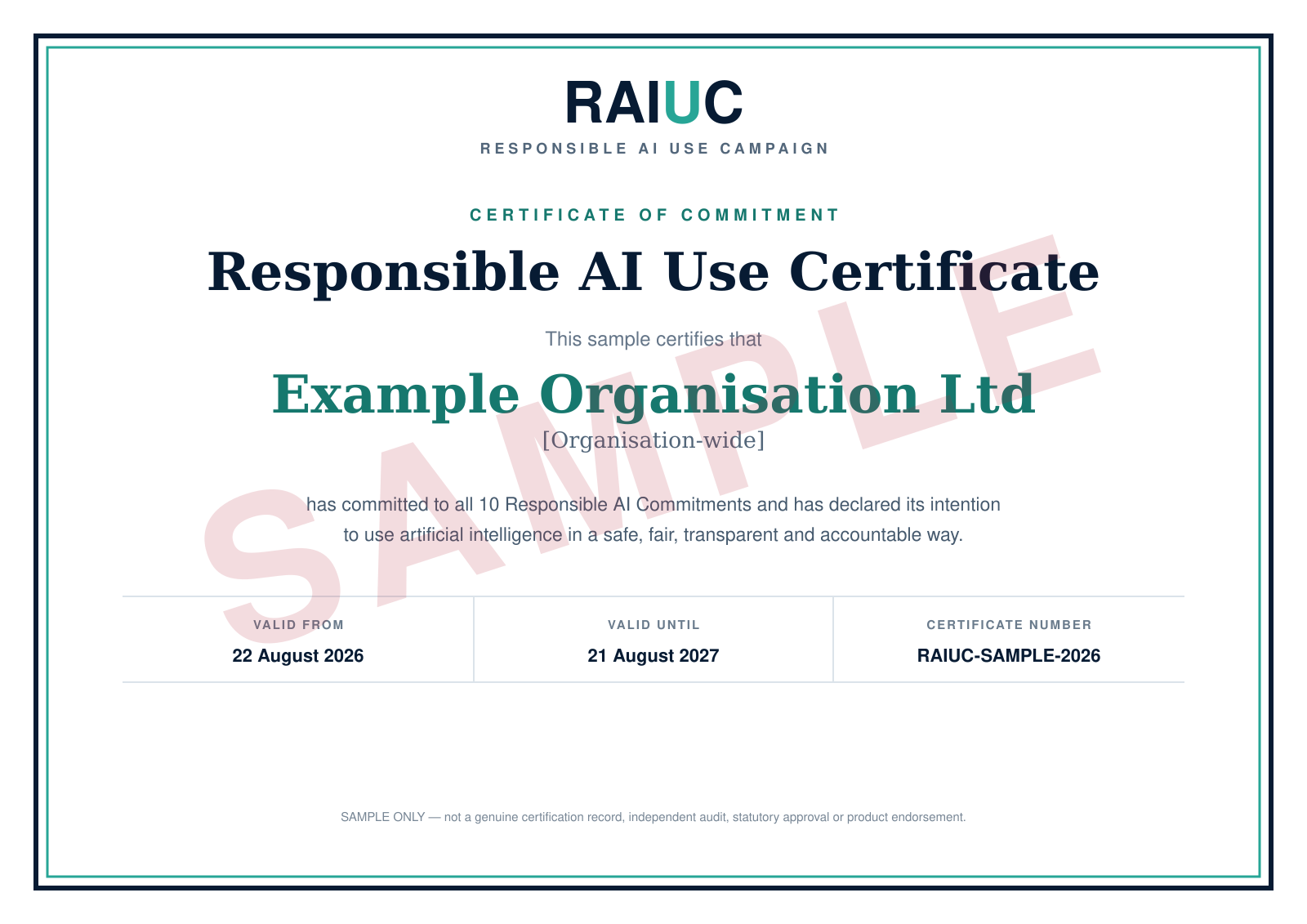
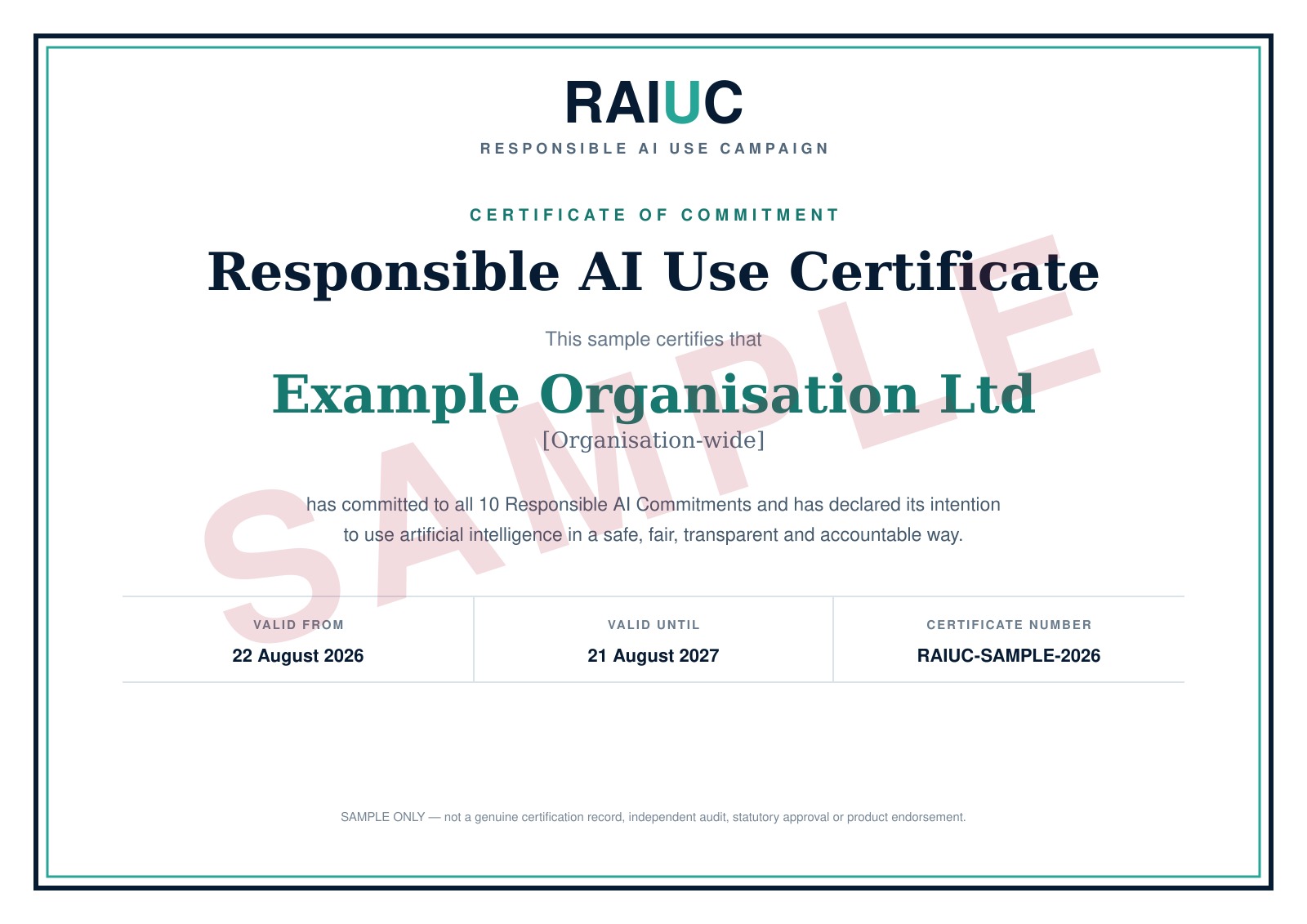
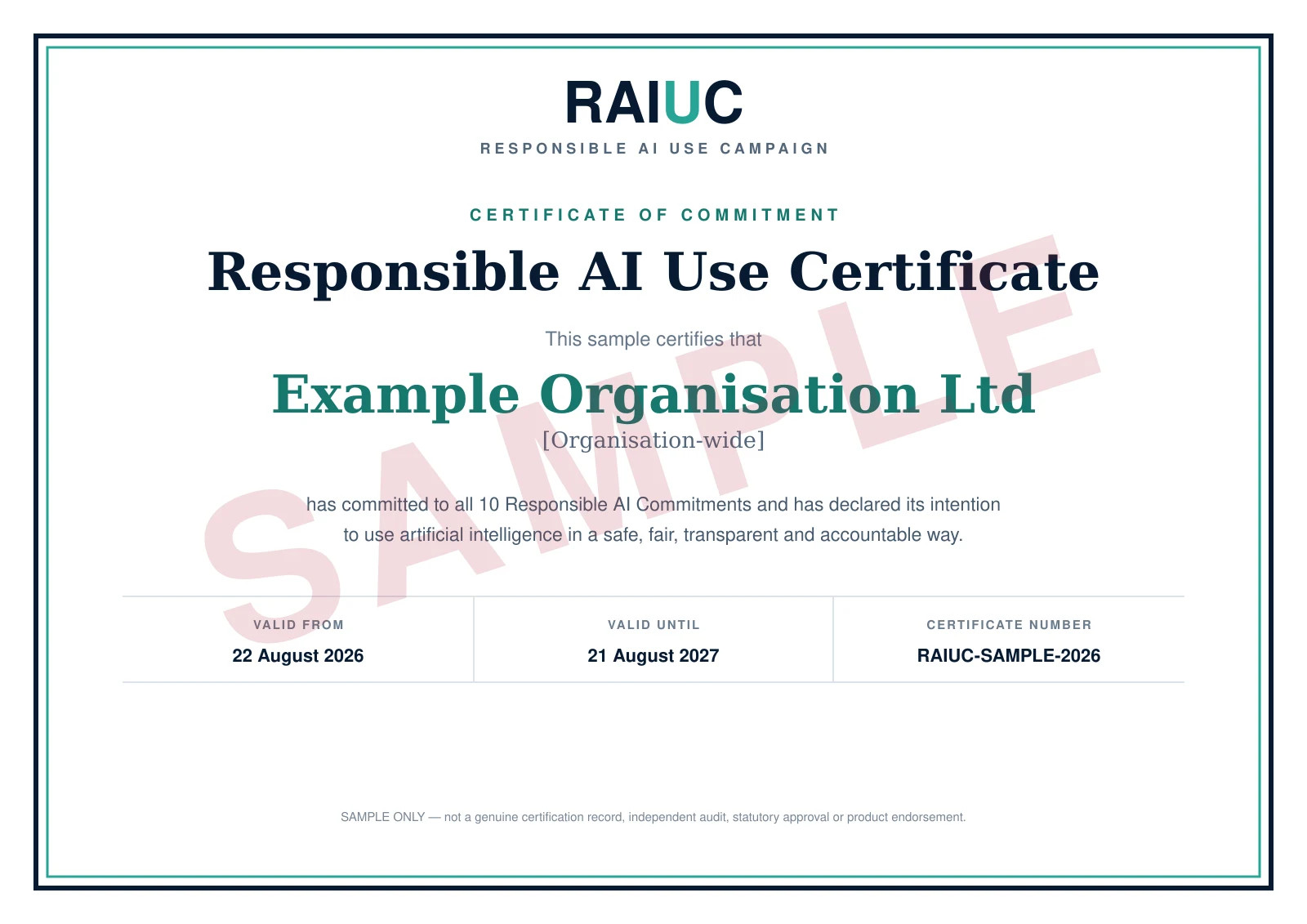
Organisations can voluntarily adopt the 10 commitments and receive free, declaration-based RAIUC certification. The certification recognises an organisation's stated intention to follow the commitments and take responsibility for its use of artificial intelligence. It gives participating organisations a visible way to communicate that responsible AI use has been considered formally.
Accessibility is a central principle of the campaign. Responsible AI governance can appear complex, particularly for smaller organisations without dedicated legal, compliance, technology or risk teams. RAIUC aims to make the subject easier to understand by using practical language and focusing on actions that organisations can realistically consider within their own circumstances, resources and level of AI adoption.
The framework is intended to support organisations at different stages of their AI journey. Some may already use AI across multiple departments, while others may only be beginning to experiment with tools for administration, research, communications or content creation. RAIUC does not assume that every organisation has the same technology, risk profile or internal structure. Instead, it offers a common set of principles that can be applied proportionately.
Alongside certification, RAIUC provides educational materials and practical resources to support continued learning. These include policy resources, checklists, guides, infographics and other tools designed to help organisations examine how AI is being used and where improvements may be needed. The resources can support staff awareness, policy development, risk reviews and internal discussion.
Human responsibility remains fundamental to the RAIUC approach. Artificial intelligence can assist with many activities, but organisations remain responsible for their decisions and consequences. RAIUC therefore encourages meaningful human oversight, particularly where AI may influence important outcomes or affect customers, employees, students, service users or members of the public.
Transparency is also important. Organisations should be able to explain, where appropriate, how AI is being used and should avoid creating misleading impressions about the role technology has played. Transparency does not require publishing technical details about every system. It means considering what people reasonably need to know and communicating information in a way that supports understanding and trust.
Privacy and security form another important part of responsible AI practice. AI systems can involve personal, confidential or commercially sensitive information. Organisations therefore need to think carefully about what information is shared with AI services, who has access, how accounts are controlled and whether suitable safeguards are in place. Responsible use requires awareness of both the benefits of AI and the consequences of inappropriate data handling.
Fairness and accuracy require similar attention. AI outputs can be incomplete, incorrect, outdated or influenced by weaknesses in the information on which systems were developed. Organisations should avoid assuming that an output is reliable simply because it has been generated quickly or presented confidently. Appropriate review, verification and professional judgement remain important, especially where errors could have meaningful consequences.
RAIUC certification is not an independent audit, legal approval, accreditation or guarantee of regulatory compliance. RAIUC does not claim that certification proves an organisation's AI systems are risk-free or that every use of AI has been independently assessed. The certification is based on an organisation's own declaration and reflects its stated intention to follow the RAIUC commitments. This distinction allows the campaign to encourage responsibility and openness without overstating what declaration-based certification can demonstrate.
The framework also encourages organisations to view responsible AI as an ongoing process rather than a one-time exercise. Artificial intelligence is developing quickly, and the way an organisation uses it may change as new tools, capabilities and risks emerge. Policies and safeguards that are appropriate today may need future review. Regular reflection helps organisations identify new issues, learn from experience and adjust their approach.
RAIUC is designed to be relevant across sectors and organisational types. Businesses can use the framework when considering AI in customer service, marketing, operations or professional work. Charities can apply it to administration, fundraising or service delivery. Educational organisations can use the commitments in teaching, assessment or research. Public bodies can draw on the principles to support accountability, transparency and public trust.
By combining a practical framework, free certification and accessible resources, RAIUC aims to help organisations strengthen accountability, build trust and approach artificial intelligence with greater confidence. It seeks to encourage responsible experimentation while reminding organisations that innovation should be accompanied by appropriate judgement, safeguards and human responsibility.
The wider goal of RAIUC is to make responsible AI governance understandable, achievable and part of everyday organisational practice around the world. As artificial intelligence becomes integrated into working life, RAIUC wants organisations of all sizes to have a straightforward way to demonstrate their intentions, improve their understanding and develop better habits around the technology they use.
Ultimately, RAIUC promotes the idea that responsible AI is not about preventing innovation. It is about ensuring that progress is accompanied by care, transparency, accountability and respect for people affected by technology. By helping organisations ask better questions, adopt practical commitments and continue learning, RAIUC aims to contribute to a culture in which artificial intelligence is used thoughtfully, responsibly and with appropriate human judgement.